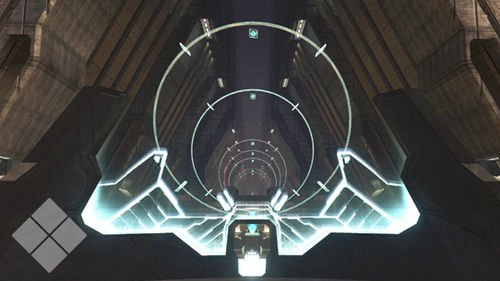
The Ark Universe Lore & Canon Expansions continue to grow, weaving an intricate tapestry far deeper than mere dinosaur taming might suggest. What began for many as a thrilling struggle for survival on a mysterious island has evolved into a sprawling, epic sci-fi saga, challenging players to not only endure but to uncover the desperate struggle for humanity's future. You're not just a survivor; you're a pawn, a participant, and eventually, a pivotal figure in a grand narrative of cosmic scale.
This isn't your average creature-feature; it's a meticulously crafted universe with a detailed history, complex characters, and profound themes of evolution, sacrifice, and the very definition of humanity. Forget what you think you know about prehistoric worlds—the Ark beckons you into a much larger, more dangerous, and utterly captivating story.
At a Glance: Decoding The Ark's Epic Story
- More Than Dinosaurs: The Ark is a complex science fiction narrative hidden beneath a survival game exterior.
- Humanity's Last Hope: The "Arks" are colossal, advanced environmental testbeds designed to preserve life.
- Uncover the Truth: The story unfolds through explorer notes, creature dossiers, environmental clues, and boss battles.
- Key Figures: Characters like Helena Walker and Edmund Rockwell drive the narrative, for better or worse.
- A Cosmic Threat: An alien substance called Element is both the solution and the ultimate corruption.
- Evolving Canon: Each major expansion (Scorched Earth, Aberration, Extinction, Genesis) deepens and twists the overarching plot.
- The Road Ahead: The current lore sets the stage for future chapters, promising an even grander universe.
Beyond Survival: Unpacking the Grand Narrative
For many, Ark: Survival Evolved starts with a naked, bewildered figure waking on a beach, punching trees, and running from Raptors. It's exhilarating, challenging, and endlessly replayable. But beneath the raw survival mechanics lies a rich, often melancholic story of a doomed Earth, desperate experiments, and humanity's last, desperate gamble. The developers, Studio Wildcard, didn't just create a game world; they built a universe where every creature, every ruin, every whispered note contributes to a mosaic of existential dread and incredible hope.
Think of it less as a game with a story, and more as a narrative experience where the gameplay is the method of revelation. You're not told the story; you discover it, piece by agonizing piece, often finding profound insights just before a Rex eats you. This layered approach is precisely what makes The Ark Universe Lore & Canon Expansions so compelling—it rewards curiosity and persistence, transforming a simple survival loop into an archaeological expedition of a dying civilization.
The Foundation: What Exactly is an Ark?
Let's clear up the biggest misconception: the "Arks" aren't just natural islands. They are colossal, self-sustaining orbital habitats, each a marvel of futuristic engineering. Conceived by a global coalition of scientists and engineers, they represent humanity's desperate final solution to a dying Earth, ravaged by a mysterious, corrupting substance known as Element.
Imagine a highly advanced spaceship, but instead of containing a small crew, it holds entire ecosystems, complete with dinosaurs, exotic creatures, and a simulated environment. Each Ark operates as a massive data-gathering and evolutionary testing facility. The goal? To nurture a new, evolved form of humanity—the "Homo Deus"—capable of surviving on a reborn Earth. They're effectively giant, controlled experiments, designed to push life to its limits and find a way forward.
These Arks aren't static. They follow complex, pre-programmed orbital paths, periodically downloading environmental data and even "resetting" their ecosystems to maintain equilibrium or introduce new challenges. The mysterious towers you see across the landscape? Those are the Obelisks, integral parts of the Ark's operational systems, managing teleportation, creature uploads, and initiating critical Ascension processes.
The Genesis of Humanity's Last Stand
The story truly begins on Earth. In the distant future, a devastating energy crisis led to the widespread mining and exploitation of a potent, highly unstable alien material: Element. Initially a miracle resource, Element proved to be a double-edged sword, eventually poisoning the planet, mutating its inhabitants, and rendering it uninhabitable. Faced with extinction, humanity initiated Project Ark.
This colossal undertaking involved constructing not just one, but many Arks, along with massive interstellar Colony Ships. The Arks were to be temporary waystations, testbeds for evolution, housing preserved samples of flora and fauna, alongside human test subjects. The ultimate plan was for the survivors—those who could ascend and prove themselves worthy—to eventually return to a cleansed Earth, or seed a new world aboard the Colony Ships. It was a race against time, a desperate gambit to salvage something from the ruins of their civilization.
Key Lore Architects: Helena Walker, Edmund Rockwell, and the Others
Much of the lore is told through the eyes and experiences of a handful of prominent figures whose explorer notes you discover scattered across the Arks. These aren't just random musings; they're vital historical documents, scientific observations, and personal journals that paint a vivid picture of the Ark universe.
- Helena Walker: A brilliant biologist and the most prolific note-taker, Helena is your primary guide. Her observations are scientific, empathetic, and increasingly philosophical. She grapples with the morality of the Arks, the nature of evolution, and the looming threat of Element. She eventually undergoes a profound transformation, becoming a digital consciousness and a key player in guiding future generations. Her journey is arguably the emotional core of the entire saga.
- Edmund Rockwell: A renowned, albeit increasingly unhinged, geneticist and chemist. Rockwell begins as a curious scientific mind, but his ambition, hubris, and an unquenchable desire for power lead him down a dark path. He becomes obsessed with Element, believing it holds the key to true evolution, eventually succumbing to its corrupting influence and becoming the primary antagonist of the later expansions. His descent into madness is a terrifying cautionary tale.
- Mei-Yin Li: A fierce warrior and general from ancient China, displaced in time and struggling to adapt. Her notes offer a historical perspective, a contrast between ancient martial prowess and futuristic technology, and a powerful voice of defiance against the Ark's harsh realities.
- Neria: A technologically advanced survivor, likely from the future Earth. Her notes often deal with the practicalities of Tek technology and the larger meta-narrative of Project Ark itself, hinting at deeper conspiracies and the true scope of the project.
These characters, alongside others like Gaius Marcellus Nerva (a Roman legionnaire) and Santiago (a Tek survivor), provide a multi-faceted view of the Ark universe, each grappling with their own understanding of this impossible reality.
Chapter by Chapter: Decoding the Expansion Lore
Each major expansion isn't just new content; it's a new chapter in The Ark Universe Lore & Canon Expansions, revealing more about the Arks, Element, and humanity's fate.
Scorched Earth: The First Test and a Glimpse of Hell
- The Story So Far: After successfully ascending from The Island (the first Ark), you're transported to a new, even harsher environment. Scorched Earth is a barren desert Ark, designed to push survivors to their absolute limits with extreme heat, sandstorms, and scarce resources.
- Lore Contribution: This expansion introduces the concept of multiple Arks, each with unique biomes and challenges. It reinforces the idea that these are engineered testbeds. Helena's notes here become more desperate, reflecting the brutal conditions. You learn more about the devastating effects of Element on environments, foreshadowing its true destructive power. The Manticore boss battle provides an early hint of the Ark's more fantastical, almost mystical elements, while still firmly rooted in its sci-fi premise. It confirms that the Arks are part of a larger, coordinated effort.
Aberration: The Broken Ark and Element's Corruption
- The Story So Far: You awaken in a vast, underground Ark, catastrophically damaged and overflowing with mutated creatures and toxic radiation. The surface is uninhabitable, forcing survivors into a subterranean struggle.
- Lore Contribution: Aberration is a critical turning point. It reveals an Ark that has gone horribly wrong, showcasing the direct, terrifying consequences of uncontrolled Element exposure. The "Nameless" creatures, the glowing fungi, and the bizarre mutations all stem from Element's corrosive influence. This is where Edmund Rockwell's story takes a dark turn; his notes here document his increasingly obsessive experiments with Element, culminating in his horrifying transformation into "Rockwell Prime"—a grotesque, sentient mass of Element and flesh that has fused with the Ark itself. This expansion firmly establishes Element as the ultimate antagonist, a living, corrupting force, and Rockwell as its primary avatar. It also introduces the "Survivors" (Homo Deus candidates) and the "Guardians" (the Overseer, Manticore, Rockwell Prime) that oversee the Arks, further solidifying the experimental nature of the world.
Extinction: Returning to Earth and the Final Confrontation
- The Story So Far: After escaping Aberration (or another Ark), you are finally returned to Earth. But it's not the pristine world humanity hoped for. Instead, it's a desolate, ravaged wasteland, dominated by massive Element corruption, corrupted creatures, and colossal "Titans."
- Lore Contribution: Extinction is the narrative climax of the original Ark saga. It reveals the full horror of a planet consumed by Element and the true purpose of the Arks: to cleanse the Earth. The corrupted creatures and powerful Titans are manifestations of the planet's illness. You learn that the Arks were designed to generate "purification codes" through survivor ascension, which, once combined, could be used to sterilize the Earth of Element. The final boss, the King Titan, is a gigantic embodiment of Element's destructive power. Helena, now a digitized consciousness, guides you, revealing the long-term plan and the true stakes. This expansion confirms the cycle: Arks train survivors, survivors ascend, Earth is purified, and new life begins. It also introduces the Orbital Supply Drops and Element Veins, showing how the Element continues to spread and threaten any attempt at rebuilding.
Genesis Part 1: The Simulation and Preparation for the Future
- The Story So Far: You are not on an Ark, but within a highly advanced virtual simulation, guided by a sophisticated AI companion, HLN-A (Helena A.I.). This simulation is designed to train you in diverse, extreme environments.
- Lore Contribution: Genesis Part 1 breaks from the traditional Ark format, but it's crucial for the overarching narrative. It serves as an extended training program, a crucible for the ultimate survivors. You learn about the concept of the "Colony Ship"—a massive starship designed to carry the true "Homo Deus" to a new home if Earth cannot be saved. HLN-A reveals more about Helena's transformation into a digital entity and her continued mission to safeguard humanity. The diverse biomes within the simulation—volcanic hellscapes, lunar-like surfaces, ocean trenches, and even a floating bog—prepare you for the varied challenges of deep space and new planets. This expansion highlights the next stage of Project Ark: not just saving Earth, but ensuring humanity's survival among the stars. The master controller of the simulation, the "System," and its various glitches and hazards, add another layer of complexity to the technologically advanced setting. Explore The Ark Season 3 to see how these ongoing developments play out.
Genesis Part 2: The Colony Ship and the Final Confrontation with Rockwell Prime
- The Story So Far: You awaken on a colossal, technologically advanced Colony Ship, the Genesis Ship, in deep space. This ship is a massive generational vessel carrying the last remnants of Homo Deus. However, it's under attack from within by a familiar, horrific foe.
- Lore Contribution: Genesis Part 2 is the culmination of the entire Ark saga. The Genesis Ship itself is a marvel, a dual-sided vessel designed for long-term interstellar travel, complete with its own simulated environments and Tek-tier technology. The critical revelation here is that Edmund Rockwell, in his Element-corrupted form, has managed to infect and take over a vast portion of the Genesis Ship, transforming it into a living, grotesque horror. He has become a truly cosmic threat, aiming to spread Element across the galaxy. This expansion brings Helena (as HLN-A) and Rockwell into their final, universe-altering confrontation. Your mission is to stop Rockwell, save the Colony Ship, and guide humanity to its new future. The ending is definitive, providing closure to the immediate threat of Rockwell and Element, and setting the stage for a new beginning on an alien world, which leads directly into the premise of Ark 2. It underscores that the journey of The Ark Universe Lore & Canon Expansions is fundamentally one of escape, evolution, and finding a new home for mankind.
Piecing It Together: How Players Uncover the Story
One of Ark's most brilliant design choices is its subtle, emergent storytelling. The lore isn't delivered in cutscenes or lengthy exposition dumps. Instead, you're an active participant in its discovery:
- Explorer Notes: These are the primary vessels of the narrative. Finding a small parchment or metal data pad and reading a survivor's journal entry instantly contextualizes your struggle. They're often found in difficult-to-reach places, encouraging exploration.
- Creature Dossiers: Helena Walker's detailed scientific observations on each creature offer insights not just into their biology, but also their role within the Ark's ecosystem, and sometimes even hints at the Ark's purpose.
- Environmental Storytelling: Pay attention to the ruins, the bizarre structures, the scattered Tek artifacts, and the general state of the biomes. A broken Ark in Aberration, the corrupted zones of Extinction, or the futuristic modules of Genesis—they all tell a silent story.
- Boss Battles: Each major boss (the Overseer, Manticore, Rockwell, King Titan, Rockwell Prime) isn't just a combat challenge; they are narrative milestones. Defeating them often unlocks critical lore reveals, cutscenes, and progress towards Ascension.
- Obelisks and Artifacts: The mysterious Obelisks and the Artifacts required to summon bosses are more than just game mechanics; they are integral components of the Ark's systems, hinting at the technology and the grand design behind your existence.
This method transforms the act of playing into a continuous detective story, rewarding observant and curious players with a rich, unfolding narrative.
The Big Questions: Untangling Common Misconceptions
Given the layered nature of Ark's story, it's easy for new players to miss the deeper narrative. Let's address some common points of confusion:
- "It's just a game about dinosaurs."
- Clarification: While dinosaurs are undeniably a huge draw, Ark is fundamentally a science fiction epic. The creatures are part of a meticulously designed, advanced experiment. Think Jurassic Park meets The Hunger Games in space, with a dash of Mad Max. The prehistoric creatures are a means to an end for the Ark's designers, not the sole purpose.
- "Are the Arks just random, magical islands?"
- Clarification: Absolutely not. Each Ark is a highly advanced, artificial construct, essentially a giant, enclosed zoo/laboratory orbiting Earth or deep in space. Their "magic" is actually advanced technology (Tek). The biomes, the weather patterns, the creature spawns—it's all controlled, monitored, and designed.
- "What's with all the glowing, futuristic stuff (Tek)?"
- Clarification: Tek technology represents the pinnacle of humanity's scientific achievements before the fall of Earth. It's the technology of the "Homo Deus"—the ascended, evolved humans that Project Ark aims to create. It's alien in its potency and design, but entirely within the bounds of the Ark universe's sci-fi framework, signaling the direction of humanity's evolution.
- "Is Element just a plot device?"
- Clarification: Element is the core antagonist and driving force of the entire saga. It's an intelligent, self-aware, and highly corrupting alien substance. It's a fundamental part of the Ark universe's physics and biology, responsible for both incredible power (Tek) and catastrophic destruction (corrupted Earth, Rockwell's transformation). It's a character in its own right.
- "Are the bosses just giant monsters?"
- Clarification: The bosses (Overseer, Manticore, Rockwell, King Titan, Rockwell Prime) are guardians, wardens, or manifestations of Element itself. They are integral to the Ark's programming or the planet's corruption, serving as tests for survivors or literal obstacles to humanity's future. Defeating them isn't just about loot; it's about progressing the narrative and proving your worth to the Ark system.
Understanding these points completely shifts the perspective on the game, transforming it from a simple survival sandbox into a rich, immersive narrative experience.
Looking Ahead: The Future of Ark's Story
The conclusion of Genesis Part 2 provides a definitive, yet open-ended, resolution to the immediate threat of Rockwell and Element. Humanity, guided by the remnants of Helena's consciousness, embarks on a new journey to an alien world, Arat Prime, far beyond the confines of Earth's solar system.
This monumental leap sets the stage for what comes next in The Ark Universe Lore & Canon Expansions. The established lore, particularly the concepts of Homo Deus, Tek technology, interstellar travel, and the ongoing quest for a new home, are foundational for future installments like Ark 2. The saga isn't just about what happened on the Arks; it's about what humanity becomes after them, how they adapt to truly alien environments, and whether the lessons learned from Element's corruption can prevent similar catastrophes on a galactic scale. The Arks were merely the training grounds; the universe is now the true arena.
Your Journey to Understanding the Ark Universe
If you've played Ark: Survival Evolved for hundreds or thousands of hours but still feel like the story is elusive, don't worry—you're not alone. The decentralized nature of its storytelling is a unique strength, but it requires a different kind of engagement.
To fully appreciate the depth of The Ark Universe Lore & Canon Expansions:
- Seek Out Explorer Notes: Make a conscious effort to find and read every explorer note. Many players rush past them, but they are the key to unlocking the full narrative.
- Read Creature Dossiers: Take a moment to read Helena's observations. They often contain subtle lore tidbits or insights into the Ark's function.
- Engage with the Community: The Ark community is vast and passionate about the lore. Forums, wikis (like the Ark Fandom Wiki mentioned in our research), and YouTube channels dedicated to lore analysis can offer incredible insights and help you connect the dots.
- Re-evaluate Your Surroundings: Look at the Obelisks, the futuristic ruins, and the environmental oddities with new eyes. Ask yourself why they are there and what they represent within the context of humanity's last stand.
- Progress Through Expansions: The story unfolds chronologically through the expansions. Playing them in order (The Island, Scorched Earth, Aberration, Extinction, Genesis 1 & 2) provides the most coherent narrative experience.
The Ark universe is a testament to ambitious world-building, a rich narrative that transforms a survival game into a grand sci-fi odyssey. By diving deeper into its lore, you won't just be playing a game; you'll be experiencing a truly unique and memorable story about the indomitable, sometimes terrifying, spirit of humanity. It's a journey well worth taking.